Muckrakers and the rise of the lurking class –
Posted on July 27, 2014 Leave a Comment
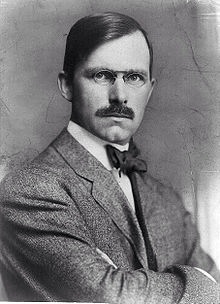
Ray Stannard Baker (April 17, 1870 – July 12, 1946), also known by his pen name David Grayson, was an American journalist and author born in Lansing, Michigan. After graduating from the State Agricultural College (now Michigan State University), he attended law school at the University of Michigan in 1891 before launching his career as a journalist in 1892 with the Chicago News-Record, where he covered the Pullman Strike and Coxey’s Army in 1894.
In 1898, Baker joined the staff of McClure’s, a pioneer muckraking magazine, and quickly rose to prominence along with Lincoln Steffens and Ida Tarbell. He also dabbled in fiction, writing children’s stories for the magazine Youth’s Companion and a nine-volume series of stories about rural living in America, the first of which was titled “Adventures in Contentment” under the pseudonym David Grayson.
More…
Not your grandmother’s Beethoven
Posted on July 25, 2014 Leave a Comment
I didn’t fully understand Grandma’s fascination with Beethoven. Sure, it was a great story – the dude was deaf after all when he composed his greatest works. But, as a 5 year old, it’s hard to grasp the subtle nuances and complexities of life. It wasn’t until Stanley Kubrick’s Clockwork Orange came out that I fell in love with Beethoven.
Ludwig Van
Posted on July 25, 2014 Leave a Comment
In the music room stood a bronze bust of Beethoven. As a tiny child he always scared me. But one afternoon Grandma took my tiny hand and to calm my fear she told me the story of Ludwig Van.
The quote I’ll never forget was, “Don’t only practice your art, but force your way into its secrets, for it and knowledge can raise men to the divine.”
Edward Everett McCall
Posted on July 24, 2014 Leave a Comment
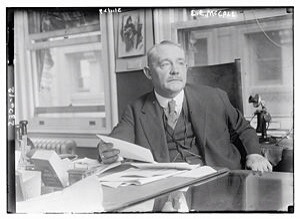
Edward Everett McCall (January 6, 1863 – March 12, 1924) was Justice of the Supreme Court of New York from 1902 to 1913 and was also the Chairman of the New York Public Service Commission from 1913 to 1915.
In November, 1915, he was removed from that office by Governor Charles S. Whitman because McCall owned stock in a company under his jurisdiction. He ran unsuccessfully as the Democratic Party candidate for the Mayor of New York City in 1913. He was defeated by John Mitchell Purroy, the boy mayor.
He died of pneumonia on March 12, 1924 in New York City.
The Boy Mayor of New York
Posted on July 24, 2014 Leave a Comment
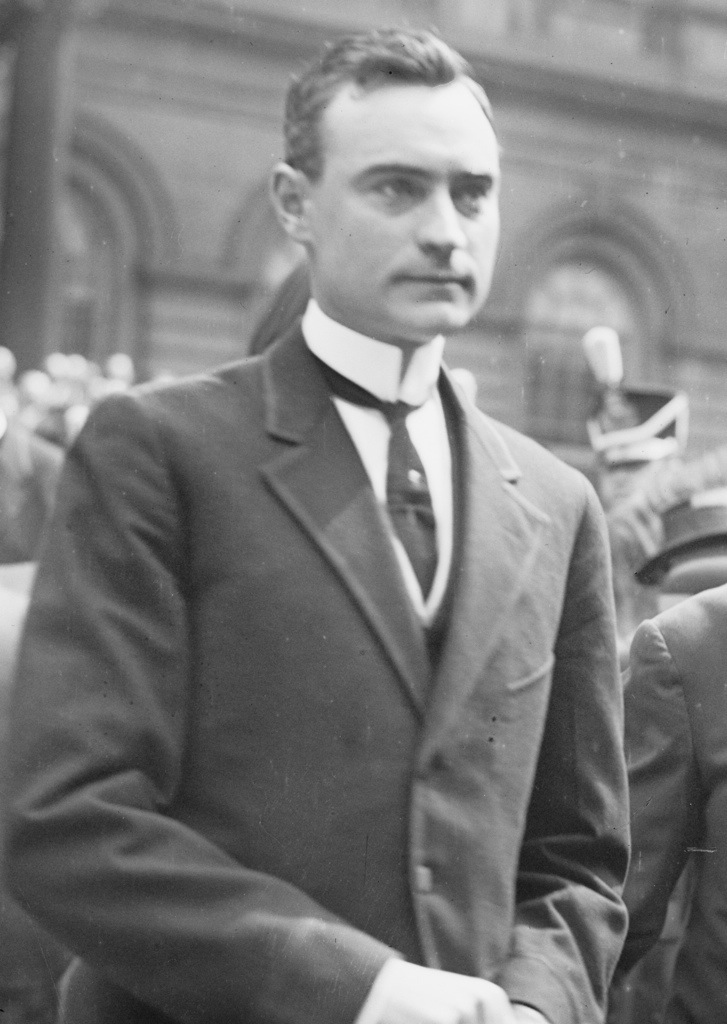
John Purroy Mitchel (July 19, 1879 – July 6, 1918) was the 95th mayor of New York from 1914 to 1917. At age 34 he was the second-youngest ever; he is sometimes referred to as “The Boy Mayor of New York.” Mayor Mitchel is remembered for his short career as leader of Reform politics in New York, as well as for his early death as an Army air officer in the last months of World War I. Mitchel’s staunchly Catholic New York family had been founded by grandfather and namesake John Mitchel, an Ulster Presbyterian Young Irelander (Irish nationalist supporter) who became a renowned writer and leader in the Irish independence movement.
As the mayoral election approached in 1913, the Citizens Municipal Committee of 107 set out to find a candidate that would give New York “a non-partisan, efficient and progressive government.” After nine ballots, Mitchel was nominated as a candidate for mayor. During his campaign, Mitchel focused on making City Hall a place of decency and honesty. He also focused on business as he promised New Yorkers that he would modernize the administrative and financial machinery and the processes of city government.
At the age of 34, Mitchel was elected mayor on the Fusion (Party) slate as he won an overwhelming victory, defeating Democratic candidate Edward E. McCall by 121,000 votes, thus becoming the youngest mayor of New York City to that date. He was often referred to as “The Boy Mayor of New York.”
More…
Pistols, pawnbrokers and personal checks –
Posted on July 24, 2014 Leave a Comment

1914 – Albany County district attorney Harold D. Alexander claims that Gifford pawned a pistol in Northampton shortly after the murder. The pawnbroker, Warren T. Risley, testifies today that he doesn’t recognize Gifford, but has his signature for the transaction. Risley does so much business that he doesn’t try to remember faces. Handwriting expert W. A. Kinsley testifies that the signature on the pawn slip matches the handwriting on a personal check endorsed by Gifford.
Apparitions –
Posted on July 23, 2014 2 Comments
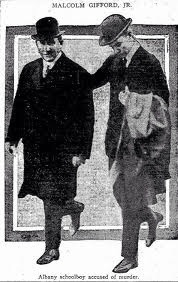
Malcolm Gifford Jr. was one of the ghosts in Grandma’s house. He would make his presence known every once in a while when the house was still and there were few people around. I’d catch a glimpse of him in his Brooks Brothers suit descending the spiral staircase, apparently on his way to a party – an apparition from a happier time somehow magically transmuted into the present. How does an attractive, well heeled young man become a ghost? What happened here in this house to imprison this boy in Grandma’s gilded cage like a trapped animal?
I will love you after the war –
Posted on July 22, 2014 Leave a Comment
Great architecture is only great because of the people it surrounds and protects. It takes more than a few greek columns, parquet floors and stained glass windows to make a house a legend. While the elements of style that define a building’s physical composition are part of the story, it’s the human element that pushes a building into the realm of legend. Sometimes those stories are buried in the backyard or stowed away in the attic or neatly tucked in a secret cabinet under a window seat. A legend can take decades to brew – sometimes centuries. So it was with 345 Allen Street.
Is the Times irrelevant?
Posted on July 22, 2014 Leave a Comment

A few years ago, well about 10 years ago actually, there was a newsstand in Sheridan Square where you could pick up the Sunday Times on Saturday night. It was just across the street from the iconic tobacco store and near the uptown subway station. All the groovy West Villagers would hang out, cruise each other, laugh at all the wannabenotnot out of towners and wait for the Times truck to roll up with the latest news from The Old Grey Lady.
Those days have long since past. Yes, you can still find hipsters and not so hip wannabenotnots in Sheridan Square on Saturday night. But, you won’t find them waiting for the Sunday Times. I haven’t read a newspaper in at least 5 years, have you? That world is dead – gone forever like the horse and buggy or rotary dial telephones – or make that flip phones and answering machines. The digital world has quickly taken over our lives. Right now I’m typing in bed on my iPad while Enrique flips through flipboard on his iPhone.
It wasn’t always like that. We were a very wasteful household. We had subscriptions to atleast a dozen magazines. I’m sure the postman cursed us everytime he tried to stuff Vogue, New York Magazine, Shape, Elle, Men’s Fitness and of course Out Magazine into our mailbox. We consumed information without concern.
Then, along came the internet and the dawning of the digital age. Things didn’t change that much though. Instead of getting the news from the paper, all you had to do was go to nytimes.com. But, something has happened that has eroded the Times’ alpha top status. The iPad and Flipboard are the culprits. In iPad’s first year its number one app was Flipboard and things have only improved from there. The Times, like thousands of other media properties are on Flipboard. The problem, or benefit depending on how you look at it, is Flipboard is open to anyone. That means a blogger typing on his iphone on the bus can break a news item long before the Times’ corp of reporters, editors, fact checkers, etc.
That concept crystallized for me last Thursday. A friend and trend obsessed sister of style asked me if I’d seen the review of the YSL biopic in the Style section. I replied, “No. I reviewed that film on my blog over two weeks ago. It doesn’t take a fairy with a crystal ball to predict the future of the Times. It’s irrelevant.
Here’s my YSL review.
 Culver McCall