Why Would Anyone Pay $450 Million for a Painting? It’s Not About the Money –

Life, like art, is often surreal. At a point in my life when I have less money in my pocket than any other time in my adult life, I find myself obsessed by Leonardo da Vinci’s Salvator Mundi, which Christies recently sold at auction for $450 million, instantly becoming the most expensive painting in the world. Last week, working as a temp for a not-for-profit in Harlem, I used some down-time to search the internet for information regarding the sale of what Christies has called, “The Last da Vinci” and also “The Male Mona Lisa.”
I’ve long been a fan of auctions, going back to my childhood. In the early 70’s my family moved from a tiny modern split-level to a twenty-one room Queen Anne Victorian. To fill all those rooms, my mother began attending auctions. Rather than pay for a baby-sitter for my brothers and me, she would drag us along to sit and watch the auctioneer sell off mostly worthless junk, but once in a while, a rare antique. Before long our house was filled with the “deals” Mom had acquired, including a few “priceless” pieces. In the process, I gained an education in antique furniture, and more importantly, a love for the auction. I’ve been a fan ever since.
Christies marketed Salvatore Mundi as The Last da Vinci – a painting so rare that it only comes to auction once in a lifetime. The marketing campaign has been so successful, evident with the historic and breath-taking auction price, it has also changed the way the art world will market art in the future. Take a look at Christies’ lush marketing video produced to create buzz for the upcoming auction.
I’m by no means an art authority and I’ll leave the discussion of the painting’s authenticity to the experts. What I do know is that Salvator Mundi is now the world’s most expensive painting in the world. That alone makes it great. We may never know if it was painted by da Vinci. We do know that it has been analyzed by several art historians and its composition has been tested with pigments dating back to the early 1500’s, the exact time da Vinci was painting the Mona Lisa. Regardless of who painted Salvator Mundi, the painting has survived the French Revolution and World Wars I and II. It has been in the possession of King Charles I and II, along with King James II of England. Think about it, at the time it was painted, America was a vast forest inhabited only by Indians. There was no art market, there was no New York City, and yet, miraculously, it somehow found its way through the ages to land at Christies on 6th Ave and 50th Streets, selling for a record breaking $450 million in less than twenty minutes. This painting, regardless of who painted it, has a mysterious power to capture our imagination.
Just watch the historic bidding…
It’s not about the money – the value of art at auction is not the value of the painting, it’s the value between the two people bidding on the piece. It’s what they’re willing to pay for the right to say they own it. Also, it’s important to remember that an art collector always considers the collection as a whole when adding a new work of art. A good addition raises the value, visibility and importance, of the entire collection. Whoever bought Salvatore Mundi for $450 million dollars was aware that his or her art collection would now contain the most expensive painting in the world, raising the value of every other piece of art in the collection. That’s priceless.
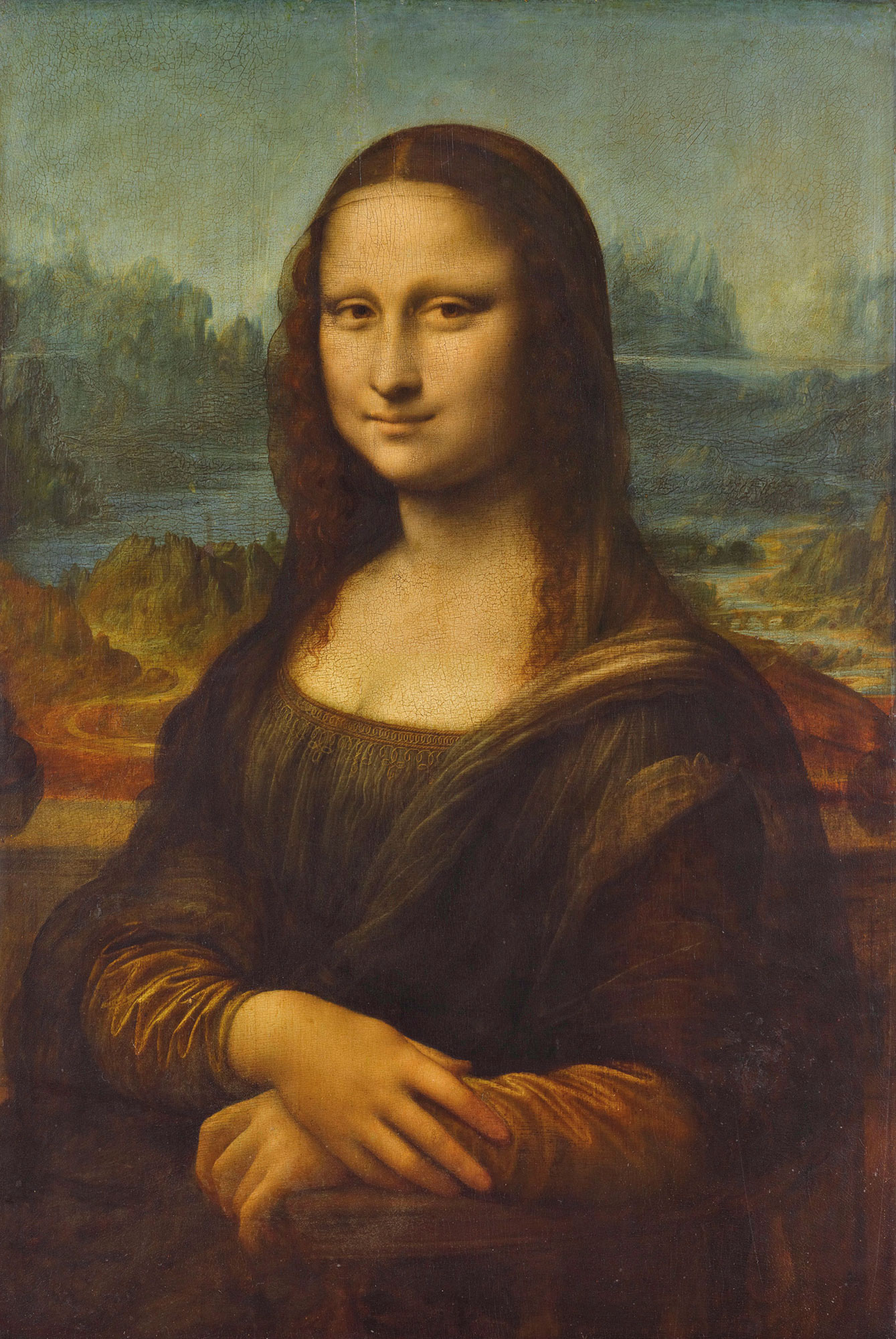
People travel from all over the globe to visit the Louvre in Paris. In its extensive collection there is only one super-star, a painting held behind bullet-proof glass that visitors queue up for, waiting hours for a few minutes gazing at her. That painting is Leonardo da Vinci’s Mona Lisa. I’ve seen her in person and as far as paintings go, she is beautiful, but it’s not the quality of the artwork that causes such a draw. It’s the storied past surrounding her that makes her a sensation. The Mona Lisa was carried by da Vinci personally, on horseback, over the Alps from Italy to France. Near his death he gave the painting to King Francois I of France, who hung it in his bathroom. It later spent time with Kings Louis XIV, Louis XV and Marie Antionette at Versailles, before it was hidden in the Palace of the Tuileries to survive the French Revolution. It then spent some time in Napoleon’s bedroom. But, the most amazing and iconic chapter of the Mona Lisa’s life was when it was stolen off the walls of the Louvre by an Italian nationalist who believed the painting should be returned to Italy. It spent a couple years in obscurity until it was miraculously rescued and returned to the Louvre, where it’s now heavily guarded. Then there was the time Jackie Kennedy personally charmed the Prime Minister of France into allowing the painting to tour the United States, as a wildly effective effort to improve French and American relations. Indeed, the Mona Lisa is the most famous painting in the world – and now Salvator Mundi is the most expensive.
The world waits to learn who the mystery buyer of the Last Leonardo is. Most likely it’s a multi-billionaire who wants to leverage the mystery and hype surrounding the controversial piece of art to improve his or her collections’ visibility. No doubt the work and its new siblings will be donated to a museum at some point and a wing of a museum will be named for the generous benefactor. That’s the only way such masterpieces can survive hundreds of years. Whatever institution is the recipient of such a gift, it and the city it’s housed in, will bask in Leonardo’s awe inspiring star power. We’ll have to wait and see where Salvator Mundi next makes an appearance. It may be a long wait.
I’ve been collecting art for about twenty years. I’ve focused on emerging artists and have never paid anywhere near the price of Salvator Mundi. However, I do understand the experience of a painting figuratively jumping off the wall and demanding to come home with you. Art collecting is an obsessive experience that few people can endure. How else could you rationalize spending a few months’ salary on a painting that you may never see a return on? An Art investment is not a liquid asset. Though, the joy of living amongst masterpieces is more than enough compensation, you can’t turn around and sell a painting for grocery money. I will probably never have the kind of cash that Salvatore Mundi has captured. But, I know the thrill that the mystery buyer must have experienced at auction. The painting literally reached into that person’s heart and took them prisoner. They must have said, “I have to have this painting. I can’t live without it.” That’s the passion of the art collector and the power of a masterpiece.
If you’re interested in some of the other most expensive paintings in the world, check out the video below.
 Culver McCall
Who bought the Salvator Mundi is obvious. Bill Gates is inspired by da Vinci, buying the Codex Leicester in 1994 for $30m. Explains the 10’s of millions in bid jumps to secure the only privately owned work. $450m is pocket money for him!! Consider hedge fund collectors worth $6b or more trying to compete with somebody worth 10 times their worth. Zero chance. Explains why their $2-$5m bid increments were countered with $17-$30m increases if someone like Gates really wanted the work. Different stratosphere of wealth.